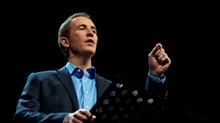
Her and Eckhart Tolle's webinars on A New Earth attracted 2 million participants.

Katelyn Beaty | May 9, 2008 9:01AM

Never underestimate the power of an Oprah endorsement. Ever since she branded German-born spirituality guru Eckhart Tolle’s A New Earth: Awakening to Your Life’s Purpose the 61st Oprah Book Club selection in January 2008, the book has sold 3.5 million copies. Over the past several weeks Oprah and Tolle have hosted unprecedented free “webinars,” on which Oprah-Tolle discuss a chapter from the book each week and field live questions from the online audience. That audience grew to 2 million people.

Tolle’s message is based largely in Eastern spirituality, though he draws from Christian language and imagery (such as the book's title). Tolle defines the human problem as a false self—what he calls “egoic mind patterns,” which can be overcome by acknowledging oneness with ultimate reality, or “God.” Here’s how Greg Boyd, senior pastor at Woodland Hills Church in St. Paul, Minnesota, summarizes it:

Tolle espouses a rather typical Eastern metaphysics in which the true “you” is not the “you” that is distinct from other people, but the (alleged) “you” that is one with the universe. To grasp this, imagine waves on an ocean. Your individual ego is one such wave, but the true “you” in the Eastern religious worldview is the ocean itself—as it is for me and every other “wave.” The wave-“you” is limited and temporary, but the ocean-“you” is unlimited and eternal.

Oprah’s website reports that she and Tolle will be offering another webinar session beginning June 16.

Boyd aside, seemingly few evangelicals have taken the time to engage A New Earth and offer a thoughtful, biblical response—perhaps because, as Peter Jones, writing for Christian Science Monitor puts it, A New Earth’s missteps are rather old:

For Tolle, "knowing self and knowing God become one and the same." The millions who've turned to Tolle might naturally conclude: I am the "I Am." Sound familiar? It should. According to the Bible, such "knowledge" springs from the oldest error of all: man's desire to be "as gods."

Stay tuned to CT for our upcoming analysis of the Oprah-Tolle craze in the next two weeks.

Related coverage:

Greg Boyd's review of A New Earth
at his blog, "Random Reflections"

The Real Secret of the Universe | Why we disdain feel-good spirituality but shouldn’t. (May 2007)

The Church of O | With a congregation of 22 million viewers, Oprah Winfrey has become one of the most influential spiritual leaders in America. (April 2002)

Share this:  Add to facebook?  Add to Del.icio.us?  Add to digg?  Add to reddit?  Add to stumbleupond?   

Posted by Katelyn Beaty at  May 9, 2008 9:01AM | Comments (0)

A man from Zion wants to change his name to "In God We Trust"

Brad Greenberg | May 7, 2008 3:27AM

It seems Steve Kreuscher has let his status as a denizen of Zion (Illinois, that is) go to his head. He's asked a judge to legally change his name to the motto that backs our money: In God We Trust.

Believe it. First name, In God. Last name, We Trust. The reason, he explains in detailed story from Daily Herald, is that God has been good to him, and he wants the world to know. The also reveals a few other interesting name changes from recent memory:

Santa Claus: Robert Rion of Mundelein, 1997

GoVeg.com: Karin Robertson of Virginia, 2003

Megatron: Michael Burrows of Washington, 2007

Optimus Prime: Scott Nall of Ohio, 2001

Pro-Life: Marvin Richardson of Idaho, 2008

Low Tax: Byron Looper of Tennessee, 1998

Jesus Christ: Jose Espinal of New York, 2005

Continue reading "My friends call me God"

Posted by Brad Greenberg at  May 7, 2008 3:27AM | Comments (2)

Scientific progress may preclude stem-cell ethical dilemmas.

Stan Guthrie | May 6, 2008 9:42AM

The end may be in sight for the debate over "harvesting" human embryos for their stem-cells in the pursuit of possible medical cures. Apparently adult stem cells--those cells gotten from human body tissues and not embryos--have the potential to be just as versatile for medical research as ESCs--but without the need to kill nascent human life. An article in Newsweek:

In June 2006, a Japanese group led by Shinya Yamanaka reported the first successful result with mouse skin cells, and between November 2007 and January 2008, Yamanaka's group and two American groups led by James Thomson and George Daley at Harvard University all reported the successful reprogramming of human skin cells into a state that is indistinguishable from human embryonic cells. Over the last several months, progress made along this new scientific path has been breathtaking. The laboratory of Rudolf Jaenisch at MIT has taken in the lead in developing therapies with this new technique in mice, demonstrating a cure for a mouse version of sickle cell anemia and alleviating the symptoms of Parkinson's disease in mice.

What these scientists can now do is essentially to take any type of cell and turn it into the equivalent of an embryonic stem cell—without needing embryos or egg cells. So what exactly are these new cells? Cells are fundamentally defined not by where they come from, but by their program of gene activity. In this sense, the new cells should be called embryonic stem cells. And since they are genetically identical to the person who provided the original sample, they are technically embryonic cell clones of that person. But scientists have discovered the power of words to elicit positive or negative emotional responses. "Clone" and "embryo" are words to be avoided. And so by consensus, the new cells are being called induced pluripotent stem cells.

Researchers say more work must be done on the promising technique.

Posted by Stan Guthrie at  May 6, 2008 9:42AM | Comments (0)

Supply and demand in a global economy.

Rob Moll | May 4, 2008 8:12PM

The economic numbers for the first quarter of 2008 showed that while the U.S. is not yet in a recession, we're sure darn close. The quarter's scant 0.6 percent growth rate suggests that ridiculously high commodity prices (oil, corn, pork bellies) should fall back to earth as Americans cut their spending, reducing demand. But as recent earnings reports show prices have skyrocketed. Since last August, the price of a barrel of crude has gone from $70 to over $110, despite six months of stagnant economic growth. The same is true for other commodities like copper, where trading volume has remained stable, suggesting that the price hike is not entirely due to speculative investors.

While economists make fine arguments in support of the belief that the rise in commodity prices is a symptom of bad monetary policy, it's also hard to dismiss the fact that high prices could simply be a matter of supply and demand—or at least expected supply and demand. One Wall Street Journal writer suggests that there are many similarities between today's economic conditions and those in the '70s, including low interest rates, a weak and falling dollar, market interventions, and high oil prices. But, he says:

there is an important difference between our troubles today and those of the 1970s. In that decade, aggregate supply sagged as oil producers scaled back production and anchovies disappeared off the coast of Peru. The 2000s have been about demand expansion. Millions of workers in China, India and Vietnam, among others, have joined the world trading system.

So, while there may be other factors influencing the rise in the price of oil, metals, and food. A fundamental reason for this price increase is a matter of basic economics: supply and demand. Indeed, despite oil prices that would encourage massive production, oil giant Chevron said it pumped less oil in the first quarter of this year than in the first quarter of 2007. And when ExxonMobil announced its production expectations, investors were shocked to hear that the company said it would pump no more oil over the next few years than it does today despite increasing its exploration and production budget by 25% to between $25 billion and $30 billion a year over the next five years. Business Week explains how astounding the announcement is:

Ponder that for a minute. Texas-based Exxon is the largest publicly traded company in the energy business. In fact, it's the most profitable company in the history of capitalism, earning a record $40.6 billion on sales of $404 billion last year. Yet even with prices at the pump near all-time highs, Exxon isn't planning on producing any more oil four years from now than it did last year.

It would be as if Steve Jobs said that though people were willing to spend nearly four times more for a Mac than they had been eight years ago, Apple would not build any more. Why is one of the best run oil companies, and most profitable company ever, declining to increase in production? Business Week explains, “Since 2000, Exxon's oil output from two of its largest regions, the U.S. and Europe, declined a startling 37%. That's 500,000 fewer barrels a day in just seven years.” In other words, its getting harder and harder to find oil. The most money being made in oil exploration is by those who can drill miles beneath the ocean floor.

While it may not be accurate to say that the world is running out of oil (a cartel dedicated to keeping prices high has too much to say about the world's oil supply to suggest the world is running out), it is accurate to say that for the moment supply is having trouble keeping pace with demand.

While supply remains stagnant, demand has spiked. “World consumption is projected to rise 35 percent, to around 115 million barrels a day, in the next two decades,” according to The New York Times. Most of the growth will come from China, India and oil-producing countries in the Middle East.”

As developing countries prosper, their citizens seek to emulate developed countries. They eat wheat instead of rice; meat instead of beans. They commute in cars from their homes miles away from the office. They buy cell phones and other electronics, increasing demand for copper and microchips. Some commentators suggest that those of us in the developed world must either quickly abandon our energy guzzling, wasteful ways or get used to a lower standard of living. Most likely, we'll have to do a little of both.

But how should American Christians react to a world in which those resources we've become used to having mostly for ourselves are suddenly in demand across the globe? Can we learn to share our global resources? Must we see a lower standard of living in our future?

Many Christian traditions have taught the lessons of simple living. Living simply, and thereby consuming less, does not necessarily correspond to a decrease in living standards. Those skills in simple living, it seems, are more needed these days as billions more people are now competing for a shrinking supply of resources. While some researchers foresee nationalistic competition in a scramble for limited resources, possibly resulting in war, Christians can be leaders not only in wisely exploiting creation but also in justly sharing it.

Of course, actually accomplishing that task takes more than words. But in a world where energy and other resource dependencies have allowed terrorists to breed and genocides to freely proceed, where people go hungry because they can't afford food, the ability to do more with less is another resource in which demand outweighs supply.

Share this:  Add to facebook?  Add to Del.icio.us?  Add to digg?  Add to reddit?  Add to stumbleupond?   

Posted by Rob Moll at  May 4, 2008 8:12PM | Comments (18)

A document called the "Evangelical Manifesto" will be released Wednesday, critiquing evangelicals who wage culture wars.

Sarah Pulliam | May 2, 2008 10:29PM

The Associated Press just reported the upcoming "Evangelical Manifesto," a document signed by 80 evangelicals that will be released Wednesday. It was CNN's lead story Friday night.

The statement, called "An Evangelical Manifesto," condemns Christians on the right and left for "using faith to express political views without regard to the truth of the Bible."

"That way faith loses its independence, Christians become `useful idiots' for one political party or another, and the Christian faith becomes an ideology," the draft states.

Evangelicals such as author and speaker Os Guinness and president of Fuller Seminary Richard Mouw signed the statement.

According to the AP, drafters say evangelicals have often expressed "truth without love," helping create a backlash against religion during a "generation of culture warring."

"All too often we have attacked the evils and injustices of others," they wrote, "while we have condoned our own sins." They write, "we must reform our own behavior."

Share this:  Add to facebook?  Add to Del.icio.us?  Add to digg?  Add to reddit?  Add to stumbleupond?   

Posted by Sarah Pulliam at  May 2, 2008 10:29PM | Comments (15)

Head of the Evangelical Council for Financial Accountability was on the job just over two years.

Madison Trammel | May 2, 2008 10:34AM

The ECFA issued a rather terse press release on Wednesday announcing that president Ken Behr was leaving the organization. No reason was given, nor were Behr's future plans explained.

According to the release, senior vice president Dan Busby will serve as acting president until a new president is chosen.

"We are thankful for the contributions Ken has made to ECFA during his tenure," ECFA chairman of the board Michael Batts said in the release. "He has stretched us to more fully utilize technology in providing membership and educational services, and he has generated a number of ideas about the growth of our membership base."

Share this:  Add to facebook?  Add to Del.icio.us?  Add to digg?  Add to reddit?  Add to stumbleupond?   

Posted by Madison Trammel at  May 2, 2008 10:34AM | Comments (0)

Response to Day of Silence shows evangelicals don't agree on when to be silent and when (or what) to speak.

Derek Keefe | May 2, 2008 12:00AM

April 25th marked the Gay, Lesbian and Straight Education Network's annual Day of Silence, described by the Network's website as a "student-led day of action when concerned students, from middle school to college, take some form of a vow of silence to bring attention to the name-calling, bullying and harassment--in effect, the silencing--experienced by LGBT (lesbian, gay, bisexual and transgender) students and their allies." Not surprisingly, the nationwide event elicited a range of responses from evangelical Christian groups at both the national and local level, and therefore offers promise as an occasion for further reflection about what form Christian witness should take in a pluralistic democratic society.

Continue reading "What form should our love of LGBT neighbors take in the public square?"

Posted by Derek Keefe at  May 2, 2008 12:00AM | Comments (15)

How the ABC network botched a basic news piece on Wheaton College.

Sarah Pulliam | May 1, 2008 4:03PM

ABC’s report of Wheaton College professor Kent Gramm’s resignation was an example of sloppy journalism and weak analysis.

The original headline was simply false: “Professor Fired for Getting a Divorce.” Gramm was not fired. He resigned because he declined to talk with the college about his divorce. (The image to the right is a screen shot of an earlier version)

abc3.JPG

Later today, ABC changed the headline to “Professor Loses Job Over Divorce.” The headline is still not quite accurate. To lose your job generally indicates that someone took it away from you. However, Gramm voluntarily resigned. And according to the Chicago Tribune, the college offered him another year of employment while he searched for another job.

Also, student Emma Vanhoozer’s name was misspelled. Most journalists are extremely careful about getting basic facts like these correct. But reporter Russell Goldman bypassed whatever fact-checking system ABC has set up, if they have one.

Not only are there factual errors, but Goldman imposes his own strange analysis on the situation.

“If the school is free to impose its beliefs on divorced family members where does the law draw the line? Could the school just as easily impose arranged marriages?” Goldman writes.

Yes, that’s the big looming threat here: forcibly arranged marriages. Someone has been reading too much coverage of the raid on the polygamist sect's ranch in Texas.

Share this:  Add to facebook?  Add to Del.icio.us?  Add to digg?  Add to reddit?  Add to stumbleupond?   

Posted by Sarah Pulliam at  May 1, 2008 4:03PM | Comments (9)

The project leader of a magazine-format Bible hopes images will provoke people to read Scripture.

Madison Trammel | May 1, 2008 10:58AM

TheBook.jpg

Apocalypse Now: Images of war, death, and ecological disaster portray the Book of Revelation in a 2007 Swedish edition of the New Testament. Called Bible Illuminated: The Book, the version’s magazine format features arresting news and fashion photography, some sexually charged. Project leader Dan Söderberg, who has a background in advertising, said the intent of the photography is simply to draw readers into the text. “The Bible in its current state tends to alienate so many people,” he said. “You can’t dismiss the Bible unless you know it, and the more you know, the more you can take part in things. After all, the Bible is used in many aspects of life — even as an excuse for starting wars. You have to inform yourself.”

Share this:  Add to facebook?  Add to Del.icio.us?  Add to digg?  Add to reddit?  Add to stumbleupond?   

Posted by Susan Wunderink at  May 1, 2008 10:58AM | Comments (0)

Jeremiah Wright's controversial remarks provoked Obama's denunciation.

Sarah Pulliam | April 29, 2008 8:16PM

Sen. Barack Obama strongly denounced Jeremiah Wright Tuesday after his former pastor made more controversial statements on Monday.

“His comments were not only divisive and destructive, but I believe that they end up giving comfort to those who prey on hate and I believe that they do not portray accurately the perspective of the black church,” Obama said. “They certainly don’t portray accurately my values and beliefs.”

Obama also wanted to clarify the relationship details. "He was never my 'spiritual mentor.' He was -- he was my pastor. And so to some extent, how, you know, the -- the press characterized in the past that relationship, I think, wasn't accurate." It's interesting that he makes this distinction for someone who guided him through his marriage, his children's baptism, and prayer for the campaign.

obama.jpg

Wright has caused a lot of chaos for the Obama campaign for the last several weeks. On Monday, Wright appeared at the National Press Club in Washington, D.C. and fueled the fire.

Obama responded to some of Wright's remarks: "[W]hen he states and then amplifies such ridiculous propositions as the U.S. government somehow being involved in AIDS, when he suggests that Minister Farrakhan somehow represents one of the greatest voices of the 20th and 21st century, when he equates the United States wartime efforts with terrorism, then there are no excuses. They offend me. They rightly offend all Americans. And they should be denounced. And that's what I'm doing very clearly and unequivocally here today."

On Monday, Wright said he hopes the controversy "just might mean that the reality of the African-American church will no longer be invisible. It is not an attack on Jeremiah Wright — it's an attack on the black church."

But Obama denounced those remarks as well. "I did not view the initial round of soundbites, that triggered this controversy, as an attack on the black church," Obama said. "I viewed it as a simplification of who he was, a caricature of who he was and, you know, more than anything, something that piqued a lot of political interest."

After the Sept. 11, 2001, attacks, Wright said in a sermon, "America's chickens are coming home to roost" after the United States. A reporter asked him what he meant and Wright replied, "Have you heard the whole sermon? No. You haven't heard the whole sermon. That nullifies that question."

When asked if he was apologetic for suggesting the U.S. should be damned, he said, “God doesn’t bless everything, God condemns something — and d-e-m-n, ‘demn,’ is where we get the word ‘damn.’ God damns some practices.” He also said that American soldiers in Iraq died “over a lie” and the war is “unjust.”

Obama made it clear Tuesday that he wants nothing to do with the remarks. "But the insensitivity and the outrageousness, of his statements and his performance in the question-and-answer period yesterday, I think, shocked me," he said.

Share this:  Add to facebook?  Add to Del.icio.us?  Add to digg?  Add to reddit?  Add to stumbleupond?   

Posted by Sarah Pulliam at  April 29, 2008 8:16PM | Comments (19)

Kent Gramm’s divorce prompted his separation from Wheaton College.

Sarah Pulliam | April 29, 2008 12:44PM

After refusing to discuss the details of his divorce, tenured professor Kent Gramm resigned from his English position at Wheaton College.

Wheaton’s faculty handbook states that the college will consider employee retention “when there is reasonable evidence that the circumstances that led to the final dissolution of the marriage related to desertion or adultery on the part of the other partner."

But Gramm declined to discuss details. “None of Your Business” headlined Monday’s Chicago Sun-Times front-page story.

dr.gramm%202.JPG

"I think it's wrong to have to discuss your personal life with your employer," Gramm told the Chicago Tribune, "and I also don't want to be in a position of accusing my spouse, so I declined to appeal or discuss the matter in any way with my employer."

Provost Stan Jones told Inside Higher Ed, “The policy calls for us to try to make a compassionate, thoughtful evaluation of the circumstances, and we are then in a real bind if a person for whatever reason chooses not to discuss those circumstances.”

Cathleen Falsani writes in the Chicago Sun-Times that her alma mater needed to employ grace.

“… [O]nce again an evangelical Christian institution earns a reputation, deserved or not, for siding with legalism over grace. And for an institution dedicated, as Wheaton is, to ‘Christ and his kingdom,’ communicating grace in a world that so desperately needs it should always be the most important part of its mission.”

The provost told Wheaton’s student newspaper, The Record, that the administration considers one or two employee divorce cases each year on a case-by-case basis, and the specifics of who initiated the divorce are not as important as the reason for divorce.

"Many churches are responding to divorce by saying that it's too messy, this is not our business, we'll just be redemptive,” Jones told The Record. “This response is problematic because you're basically declaring divorce not to be a moral issue. It doesn't seem that Scripture gives us that latitude."

Officials told the Chicago Tribune that they were willing to allow Gramm to remain at the college for another year as he sought work, but he declined. He is still looking for work.

"I plan to live happily ever after," he told The Record. "The next time someone says to you, 'Hello, welcome to Walmart,' be nice to him. I already have clothing with a W on it."

Gramm’s story poses questions for many religious institutions of whether divorce should be a criterion in professional standards.

Share this:  Add to facebook?  Add to Del.icio.us?  Add to digg?  Add to reddit?  Add to stumbleupond?   

Posted by Sarah Pulliam at  April 29, 2008 12:44PM | Comments (51)

Senate and House legislators are running out of time to pinpoint parameters of Evolution Academic Freedom Act.

Katelyn Beaty | April 28, 2008 3:52PM

Florida’s news outlets are abuzz again with the latest developments in the state’s attempt to pinpoint guidelines for science education in public classrooms. This morning the Florida House of Representatives passed a bill 71–43 that requires public school teachers to offer “a thorough presentation and scientific critical analysis of the scientific theory of evolution,” more obtuse wording than that approved by Florida's Senate last Wednesday.

The Senate’s bill, called the “Evolution Academic Freedom Act,” was spearheaded by Sen. Ronda Storms and aimed at granting educators the right to present scientifically grounded alternatives to evolution, along with protecting them from disciplinary action for doing so. The bill borrows largely from an academic freedom bill drafted by the Discovery Institute, the leading research center on intelligent design, and focuses on teachers’ First Amendment rights.

Proponents of both bills repeatedly stated that the legislation does not allow creationism or intelligent design to be taught in classrooms, and that neither bill includes religious language.

Florida legislators have until this Friday to come to agreement on the bill’s wording. Considering the House’s agreed-upon wording was already rejected by the Senate in earlier hearings, it remains dubious whether the legislators will be able to pass a bill at all.

Florida’s debate over evolution began last October, when the State Board of Education adopted new science education standards that identified evolution as the “fundamental concept” underlying biology. Before the new standards, the Board of Education’s statewide curriculum did not include the word evolution.

See CT Newsfeed's prior coverage of evolution and science education.

Share this:  Add to facebook?  Add to Del.icio.us?  Add to digg?  Add to reddit?  Add to stumbleupond?   

Posted by Katelyn Beaty at  April 28, 2008 3:52PM | Comments (0)

The senior evangelical statesman turns 87.

David Neff | April 27, 2008 3:41PM
john_stott_2003.jpg

A weekend e-mail from John Stott Ministries called attention to the April 27 birthday of "Uncle John." The senior evangelical statesman turned 87 on Sunday.

Stott retired from all active public ministry just one year ago and moved into a retirement facility for Anglican clergy. JSM president Ken Perez reports that Stott is happy and doing well in his new surroundings:

Continue reading "Happy Birthday, John Stott"

Posted by David Neff at  April 27, 2008 3:41PM | Comments (4)

Precedent could allow for Church of Satan design, too

Brad Greenberg | April 25, 2008 3:57PM

This might seem like a good idea, but ...

Florida drivers can order more than 100 specialty license plates celebrating everything from manatees to the Miami Heat, but one now under consideration would be the first in the nation to explicitly promote a specific religion.

The Florida Legislature is considering a specialty plate with a design that includes a Christian cross, a stained-glass window and the words "I Believe."

Rep. Edward Bullard, the plate's sponsor, said people who "believe in their college or university" or "believe in their football team" already have license plates they can buy. The new design is a chance for others to put a tag on their cars with "something they believe in," he said.

If the plate is approved, Florida would become the first state to have a license plate featuring a religious symbol that's not part of a college logo. Approval would almost certainly face a court challenge.

This story from the AP is what I like to call religious-controversy in a can. There is an exact formula to reporting these kneejerkers out. Introduce the "major news" (these are CNN standards), followed by a supportive quote about how Christians just want equal rights and then the contrarion view from Americans United, the ACLU or Michael Newdow. My vote's for contestant No. 2:

Continue reading "Florida Considers Christian-themed License Plate"

Posted by Brad Greenberg at  April 25, 2008 3:57PM | Comments (3)

Top Evangelicals sign joint declaration that recognizes joyful celebration in Israel's creation and notes Palestinian "cries of pain and distress."

Tim Morgan | April 22, 2008 4:59PM

The nation-state of Israel will have its 60th birthday celebration on Thursday, May 8. This will be a milestone event in Middle East history. It comes at a time when Israel faces near-daily rocket attacks from northern Gaza.

While lovers of Israel from around the world will celebrate, there are others who will observe the anniversary and also maintain a deep commitment to justice for Palestinians.

Two individual Christians Ben White and Philip Rizk recently composed:

A Joint Declaration by Christians on Israel's 60th Anniversary This statement says in part: "...We recognise that today, millions of Israelis and Jews around the world will joyfully mark the 60th anniversary of the establishment of the state of Israel (Yom Ha'atzmaut). For many, this landmark powerfully symbolises the Jewish people’s ability to defy the power of hatred so destructively embodied in the Nazi Holocaust. Additionally, it is an opportunity to celebrate the wealth of cultural, economic and scientific achievements of Israeli society, in all its vitality and diversity.

We also recognise that this same day, millions of Palestinians living inside Israel, the Occupied Palestinian Territories, and the worldwide diaspora, will mourn 60 years since over 700,000 of them were uprooted from their homes and forbidden from returning, while more than 400 villages were destroyed (al-Nakba). For them, this day is not just about the remembrance of a past catastrophic dispossession, dispersal, and loss; it is also a reminder that their struggle for self-determination and restitution is ongoing.

To hold both of these responses together in balanced tension is not easy. But it is vital if a peaceful way forward is to be forged, and is central to the Biblical call to “seek peace and pursue it” (Ps. 34:14). We acknowledge with sorrow that for the last 60 years, while extending empathy and support to the Israeli narrative of independence and struggle, many of us in the church worldwide have denied the same solidarity to the Palestinians, deaf to their cries of pain and distress.
To acknowledge and respect these dual histories is not, by itself, sufficient, but does offer a paradigm for building a peaceful future. Many lives have been lost, and there has been much suffering. The weak are exploited by the strong, while fear and bitterness stunt the imagination and cripple the capacity for forgiveness."

A number of influential evangelicals have signed this declaration, including:

Continue reading "Israel at 60: Celebrate and Seek Justice"

Posted by Tim Morgan at  April 22, 2008 4:59PM | Comments (2)

Supreme Court rules Messianic believers must be granted citizenship rights in many cases.

Tim Morgan | April 21, 2008 5:32PM

For decades, Israel has made it next to impossible for immigrant Messianic Jews, who affirm belief in Jesus as Messiah, to become citizens of Israel. Often, if Messianic believers disclosed their faith in 'Yeshua,' the name they use for Jesus, government authorities would reject their citizenship application.

But last week, the Supreme Court of Israel, ruled on a case involved 12 Messianic Jews who sued the government Ministry of the Interior for their legal 'right of return' (and then to become citizens of Israel).
The court in its ruling said:

The parties have submitted to us the following notification:
“In their notification dated 13.04.08 the Respondents declared, that the fact that a person is a “Messianic Jew” has no bearing on an application according to Sec. 7 of the Law of Citizenship, as well as an application according to Sec. 4(A)(a) of the Law of Return (as long as the person applying according the abovementioned section of the Law of Return is not considered to be Jewish, as described in section 4B of the Law of Return).
The Respondents declare that in accordance with their notification they will process the applications of all Petitioners as soon as possible, as well as the application of Alvetina Zibareva, and Valentina Zibareva who requested to join the petition on 01.04.08 to the extent that their request is similar.
Due to these circumstances the representatives of the Petitioners requested to remove the petition without a ruling regarding court costs.
The Petition is removed by consent as aforesaid.

One blogger explains the ruling this way:

I received a communication today that clarifies the settlement reached yesterday in Israel...
The ruling would not cover all Messianic Jews, but would cover many of them: If a person was not a Jew previously (religious definition) but is a descendant of Jews, then they can make aliyah (citizenship) without discrimination for their current faith in Yeshua.

According to CBN:

"This is yet another battle won in our war to establish equality in Israel for the Messianic Jewish community just like every other legitimate stream of faith within the Jewish world," said Calev Myers, founder and chief counsel of the Jerusalem Institute of Justice.

Messianic belivers in Israel were wondering whether the recent bomb attack on Ami Ortiz, the son of Messianic pastor, had any influence on the court's ruling. Ortiz was severely injured in the incident and is expected to be in recovery for months to come.

Share this:  Add to facebook?  Add to Del.icio.us?  Add to digg?  Add to reddit?  Add to stumbleupond?   

Posted by Tim Morgan at  April 21, 2008 5:32PM | Comments (5)

Rising prices for essentials precede riots in some parts of the developing world. Are biofuels partly to blame?

Stan Guthrie | April 21, 2008 9:36AM

With gasoline flowing toward $4 a gallon in the U.S., some Americans are trying to figure out what they can cut from their budget to remain behind the wheel. In other parts of the world, high prices for basic items are causing more trouble.

The prices of wheat and rice this year will have doubled since 2004, according to World Bank projections. Soybeans, sugar, soybean oil and corn are expected to be 56% to 79% costlier than in 2004. The bulk of the increases have come in the past year and can be attributed to the West's push to turn these crops into fossil-fuel replacements like ethanol. Food prices will likely remain overinflated until at least 2015, the Bank says.

The result of these rising prices is that 100 million people could slip back into poverty, erasing seven years' worth of gains, Bank President Robert Zoellick warned earlier this month. Food inflation and shortages have sparked riots from Egypt to the Philippines, and six people were killed in Haiti alone during nine days of related unrest there this month.

Soaring oil prices have made it more expensive to transport food products, though the World Bank estimates this and costlier fertilizer account for only 15% of the rise in food prices. Improved eating habits in developing nations are also increasing demand for grains – both for human consumption and to feed livestock, since rapid economic growth in places like China means more people have enough money to buy meat. But the Bank notes that "almost all" of the increased growing of one of the key crops, corn, "went for biofuels production in the U.S."

For a look at what the World Bank says about the food crisis, click here.

While the science of whether ethanol is an efficient use of corn, given its proportional removal from the world's food supply, is beyond me, the current world food crisis points out the fact that there are economic costs and drawbacks with every government mandate and subsidy. There is no such thing as a free lunch. When corn is turned into fuel, it cannot be used for food, and some who would eat that corn will have to buy other food (presumably at a higher price) or go hungry.

Share this:  Add to facebook?  Add to Del.icio.us?  Add to digg?  Add to reddit?  Add to stumbleupond?   

Posted by Stan Guthrie at  April 21, 2008 9:36AM | Comments (8)

Daughter of Adventist missionary and her family survives crash in Goma, DR Congo.

Tim Morgan | April 17, 2008 11:33AM

News reports of the recent tragic plane crash in Goma, Democratic Republic of Congo, are just beginning to trickle out. One story getting much attention is focused on the heroic action of 14-year-old April Mosier.

In this Mosier family photo, April Mosier is on the far left.

HL_timblog3%20copy.jpg

Adventist Review news editor, Mark A. Kellner, reports:

The young woman, was traveling with her mother, father, and 3-year-old brother from Goma to Kisangani, Congo, where her older brother Keith, 24, has begun a mission project. The Mosiers are all serving with Outpost Centers International, a lay ministry that supports the Seventh-day Adventist Church. The flight did not clear the runway – media reports indicate a tire may have blown out – and the plane crashed into a nearby open-air market. At least 40 people were reported killed; more than 100 survived, reports indicate. April “probably was one of the first ones to get to the opening,” Barry Mosier, her father, said in a telephone interview from Goma two days after the crash. “She was right there, knowing what to do; none of the exit doors were open. She told a man, in Swahili, that ‘We’ve got to get out of there or we’ll die,’” he added. Young April pushed at a panel until a passage large enough for her to get through was found; she then made a run for it. Her father said that April had feared her family had died in the crash; they were later reunited at a local hospital.

Click here for the CNN version.
The Mosier family, originally from Minnesota, has been focused on missions work in southwestern Tanzania. For the full story from Adventist news, click here.

Share this:  Add to facebook?  Add to Del.icio.us?  Add to digg?  Add to reddit?  Add to stumbleupond?   

Posted by Tim Morgan at  April 17, 2008 11:33AM | Comments (1)

The Supreme Court rules lethal injection is constitutional; now, they're deciding if capital punishment is limited to cases of murder.

Susan Wunderink | April 16, 2008 7:57PM

The Supreme Court (SCOTUS) today tackled one case on the death penalty and is on to the next.

The biggest news from SCOTUS was the 7 – 2 ruling that Kentucky’s method of lethal injection was a constitutional form of capital punishment and not cruel and unusual.

“The case before the court came from Kentucky, where two death row inmates wanted the court to order a switch to a single drug, a barbiturate, that causes no pain and can be given in a large enough dose to cause death,” NPR reports.

In executions by lethal injection, a team of doctors administers a barbituate to numb, a paralytic, and then sodium chloride, which causes cardiac arrest, through an IV. One of the main objections to lethal injection is that any of the drugs is ineffectively administered, the execution would be painful, undignified, or drawn-out.

That risk, however, isn’t enough to make the method illegal, said Chief Justice John Roberts.

Continue reading "At the Edges of the Death Penalty"

Posted by Susan Wunderink at  April 16, 2008 7:57PM | Comments (0)

Clyde Cook, former president of Biola, helped nearly double the university's student body.

Sarah Pulliam | April 14, 2008 4:34PM

Clyde Cook, the recently retired president of Biola University, died April 11. He was 73.

Known for several years as "Mr. Biola," Cook served as one of the nation’s longest-serving university presidents, leading the California university from 1982 to 2007.

Cook faced enormous challenges when he took the helm. A budget shortfall of 37 percent forced him to cut $1.3 million. And just two years into his presidency, he had a major heart attack at the age of 49. Also, Biola’s enrollment dropped from 3,181 in 1980 to 2,566 in 1989.

clydecook1.jpg

However, Biola’s enrollment has nearly doubled to 5,752, and the university added 20 acres to the campus and nine extension sites. Cook handed the reins to Barry H. Corey last summer. The university celebrated its centennial in February, and the Los Angeles Times wrote about how Biola has both evolved and stayed the same.

"When Ken Bascom arrived at Biola College in 1967 to work on his master's degree in history, his fellow students, almost all white, stuck to a strict dress code and had a 10 p.m. curfew on weeknights," wrote reporter Tiffany Hsu. "Last weekend, a multicultural throng of students, several with dyed hair, piercings or tattoos, celebrated the centennial of the private evangelical school -- a university since 1981 -- at a rock concert that extended into the early morning."

The New York Times featured Biola in 2004, when Samantha M. Shapiro wrote, "Evangelical Christianity's dance with secular culture has always been a complicated one." In the early 20th century, Biola sponsored a series of pamphlets called "The Fundamentals," which laid out the principles of the fundamentalist movement. The pamphlets opposed biblical and theological modernism, naturalism, Darwinism, and democratic socialism.

"When I spoke with Clyde Cook, Biola's genial president, he explained that the university is as committed as ever to the principles articulated in 'The Fundamentals,' although, he said, 'we've found different and more effective ways to deliver those truths.' ... [T]he school thinks it is preferable to have students internalize Christian truths through a process of questioning."

The Chimes, Biola's student newspaper, created a blog for people to share their memories of Cook.

"If it's possible for a man who towered over most people physically to walk gracefully and humbly, Clyde Cook had mastered it," wrote Chimes Features Editor Mitchell Young. "If there's one image I will always remember, it's a man whose list of accomplishments could fill books (and probably has) sitting at a crooked Caf table and eating with plastic silverware on one of the days that the Caf decided to give its dishwashers a day off."

Share this:  Add to facebook?  Add to Del.icio.us?  Add to digg?  Add to reddit?  Add to stumbleupond?   

Posted by Sarah Pulliam at  April 14, 2008 4:34PM | Comments (7)