May 5, 2009 1:59PM
Church property fight heads to Supreme Court

Timothy C. Morgan
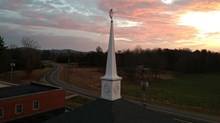
st%20james%20crossing.jpg

For about the past two years, I have had this hunch that sooner or later the US Supreme Court would be presented with a church-property dispute that would sharply question the role of the judiciary in settling disputes between a Protestant denomination and a local parish or congregation.

It looks like 'sooner' has arrived now.

About noon today (May 5), while Anglicans worldwide are watching events in Jamaica, where top leaders are debating the proposed Anglican Covenant, St. James Anglican, Newport Beach, California, released an press statement saying they would be appealing the decision of the California Supreme Court to the US Supreme Court.

Here's some of what the press statement said:

St. James Anglican Church, at the centerpiece of a nationally publicized church property dispute with the Episcopal Church, announced today that it will file a petition for writ of certiorari with the United States Supreme Court to resolve an important issue of religious freedom: Does the United States Constitution, which both prohibits the establishment of religion and protects the free exercise of religion, allow certain religious denominations to disregard the normal rules of property ownership that apply to everyone else?

I would have to agree the US Supreme Court should address this area. In recent years, the high court has not done as good a job as it might have on mapping the boundaries between church and state.

The issue here from my point of view is state and judicial intervention into the inner workings of voluntary religious organizations (denominations); and, based on the California Supreme Court ruling recently, the court's inappropriate preference for the religious institution versus the individual congregation.

Let's face it. For the vast number of American Protestant congregations, the relationship today with their denomination is mostly a one-way street. Send money to the HQ and get very little in return.

The leaders at St. James Anglican said in their statement:

Under longstanding law, no one can unilaterally impose a trust over someone else's property without their permission.

Yet, in the St. James case before the California Supreme Court, named Episcopal Church Cases, the Court created a special perquisite for certain churches claiming to be "hierarchical," with a "superior religious body," which may allow them to unilaterally appropriate for themselves property purchased and maintained by spiritually affiliated but separately incorporated local churches. St. James will argue before the U.S. Supreme Court that this preferential treatment for certain kinds of religion violates the U.S. Constitution.

You can find the full statement here.

If you worship in a church that is part of a Protestant denomination, what do you get for that in return?

Is the relationship "until death do you part"?

Or, does your denomination allow individual congregations to dis-affiliate?

Post your comments below.

(Photo credit: St. James Newport Beach, interior.)

Posted by Tim Morgan on May 5, 2009 1:59PM

Comments

Part of my disappointment with all of this is that clearly we are not to be suing one another. And if you feel strongly enough to leave the denomination, then leave the church building. That says a lot more about your convictions than saying bye to the denomination and then asking for the building and assets to go with it. I know the picture is much more complicated than that. I know the local churches have built and paid for their church. But I still don't see how you get past scripture and the strength of your convictions problem.

Posted by: Adam S at May 5, 2009

You and the St. James press release make it sound like the California Supreme Court just picked sides out of thin air. The California decision, which was unanimous on the question of who owned the property, included a lengthy and detailed analysis of the U.S. Supreme Court decisions upon which it was based. If you are going to express a legal opinion, you at least owe CT readers some explanation of what the actual legal issues are and of the actual facts upon which the court's legal analysis was based.

Yes, the deed did not contain a trust for the Episcopal Church, BUT, the local congregation's own corporate governing documents had long acknowledged that the Episcopal Church had a trust on the property. So, the court didn't "show a preference" so much as it enforced the local congregation's corporate governing documents, which expressly incorporated the Episcopal Church's canon imposing a trust on the property.

The U.S. Supreme Court has expressly held that state courts may adopt a "neutral principles of law" approach under which a state may "settl[e] a local church property dispute on the basis of the language of the deeds, the terms of the local church charters, the state statutes governing the holding of church property, and the provisions in the constitution of the general church concerning the ownership and control of church property." Jones v. Wolf, http://supreme.justia.com/us/443/595/case.html This is exactly what the California Supreme Court did.

St. James claims "Under longstanding law, no one can unilaterally impose a trust over someone else’s property without their permission." This is false. As the court noted, California enacted a law in 1982 that provides that such a trust cannot be imposed UNLESS, "and only to the extent that, the articles or bylaws of the corporation, or the governing instruments of a superior religious body or general church of which the corporation is a member, so expressly provide." The Episcopal Church's canons so provide. And, the local congregation explicitly gave their permission by adopting and incorporating the EC's canons into the local congregation's corporate governing documents, which makes it not a "unilateral" imposition of a trust on someone else's property.

This California statute (and many other similar statutes in other states) follows U.S. Supreme Court precedent which permitted a state to adopt the "principle of government" approach, which enforces a church's governing principles. See Watson v. Jones, http://supreme.justia.com/us/80/679/case.html#728 :

"The law knows no heresy, and is committed to the support of no dogma, the establishment of no sect. The right to organize voluntary religious associations to assist in the expression and dissemination of any religious doctrine, and to create tribunals for the decision of controverted questions of faith within the association, and for the ecclesiastical government of all the individual members, congregations, and officers within the general association, is unquestioned. All who unite themselves to such a body do so with an implied consent to this government, and are bound to submit to it. But it would be a vain consent, and would lead to the total subversion of such religious bodies, if any one aggrieved by one of their decisions could appeal to the secular courts and have them reversed. It is of the essence of these religious unions, and of their right to establish tribunals for the decision of questions arising among themselves, that those decisions should be binding in all cases of ecclesiastical cognizance, subject only to such appeals as the organism itself provides for."

St. James also claims that "the Court created a special perquisite for certain churches claiming to be “hierarchical,” with a 'superior religious body,' which may allow them to unilaterally appropriate for themselves property purchased and maintained by spiritually affiliated but separately incorporated local churches." Again, this is false. The court did not "create" anything. The California Legislature, following the U.S. Supreme Court decision in Watson v. Jones, passed the statute permitting the trust to be imposed the way it was.

The California decision was unanimous as to local congregation's ownership of the property and the opinion identified no split within the federal appellate courts that needs to be sorted out. I can't imagine that the U.S. Supreme court would agree to take this case.

Posted by: Christian Lawyer at May 6, 2009

What is crazy about all of this is that the Episcopol Church (ECUSA)can decide to no longer remain a Christian denomination and then immediately seize all assets of a local church that wants to remain a Christian denomination and keep the assets that the local church paid and owns.

ECUSA bullies and threatens anyone who gets in their way of claiming assets that they did not pay for or own when a local church decides to not stay with them after ECUSA decides to become a populist religion.

Posted by: Chop at May 6, 2009

I'm a church-planting pastor in the Evangelical Free Church of America. Financially, support for the denomination is optional for our local churches - and many do not contribute. Churches also have the option to accept or reject denominational help.
We do choose to send financial support. And we receive excellent resources - most of all in terms of outside wisdom and expertise - from the EFCA.
We could dis-affiliate down the road. But my congregation's leaders so appreciate what we've gained from the EFCA movement that it's hard for me to imagine even having a dis-affliation discussion.

Posted by: Josh Knaub at May 6, 2009

Tim wrote: "But I still don't see how you get past scripture and the strength of your convictions problem."
It's easy if you have a weak conscience. People in power will do whatever they want -- if they can get away with it. The whole Elders Board at Lincoln Road Chapel in Waterloo, Canada excommunicated me without providing an explanation. I visited their office & asked the 2 present pastors if they were willing to meet/reconcile. The lead passtor picked up the phone & called the Police to remove me for tresspassing. (I lead the other pastor to the Lord. He is also my brother-in-law.) ~ And they tell other churches "how-to-do-it" via Vision Ministries.

Posted by: robert george at May 6, 2009

The title Church property fight heads to Supreme Court is rather misleading.All St. James has done is to petition the Supreme Court to review their case. Anybody can send a petition to the Supreme Court, and the Supreme Court rejects 99.9% of all petitions they receive because they deem the legal reasoning used in the decision valid and there is no constitutional issues involved.The recent Grace Church, in Colorado Springs case was decided by a straight forward appllication of the law. There Judge Larry E. Schwartz said:

that the parish's "founding documents, various bylaws, relevant canons of the general church and consistent parish loyalty to the Diocese over most of its 135-year existence demonstrate a unity of purpose on the part of the parish and the general church that reflects the intent that all property held by the parish would be dedicated to and utilized for the advancement of the work of [the Episcopal Church].""While freedom of religion recognizes the right of any faction within a church to leave that church whenever they choose, the trust that has been created through past generations of members of Grace Church and St. Stephens prohibits the departing parish members from taking the property with them," Schwartz concluded.

Posted by: MonkeyBoy at May 7, 2009

I would be very surprised if the US Supreme Court decides to hear this case much less rule in favor of St. James. Different denominations are structured differently as to property, so this really says nothing that can be universally applied to "a Protestant denomination and a local parish or congregation."

St. James' parish is loaded with funds. I'm not surprised they decided to roll the dice on this one.

Posted by: Dave N. at May 7, 2009

What happens when the Episcopal Church has billions of dollars in assets but no members? Given its current trajectory that's where it's headed. The Church may have a tenuous legal claim to the property, but it has no moral claim whatsoever, especially as it makes more doctrinal changes in the space of a few decades than it's made in centuries.

Contra the first commenter here, it is the leadership, stubbornly clinging to property it no longer needs, which is acting entirely un-Christian. But then we knew that, didn't we?

Posted by: Timothy R at May 17, 2009

Timothy R, I agree the Episcopal leadership is acting unbiblically. But that does not give those that are leaving the church warrant to act unbiblically as well. If they don't like the structure of the denomination, then stick around and change it. But if you feel strongly enough to leave, then don't complain about not getting everything you want and go to secular judges to have them work it out. It is pretty clear from scripture that we should not be doing that.

Posted by: Adam S at May 22, 2009

Timothy R, your suggestion not to go to court sounds Biblically sound. But, we have been working for change in our denomination for the past 4 years. The denominational leadership tiered of our efforts. They declared we were not functioning as a denomination church and started a court process to obtain our property. We did not ask to leave, they ex-communicated us after 70+ years of faithful service and tithing we have been terminated and our properties in the process of being ceased. This is what the court needs to address.

You can not have religious freedom when hierarchical religious organizations entrap and enslave congregations. The first generation volunteers to join the religious organization based on relationship. The future generations are enslaved. They can not choose to serve the religious organization in love rather they are forced to serve or leave with nothing. This is establishment of religion and not the free exercise thereof.

Posted by: Galen M at June 1, 2009

I was told that when a congregation joins The Episcopal Church one requirement is, that all property must be deeded to 'The Episcopal Church'. If this be so, than case is closed. I have however, read the Constitution and Canons and cannot find this requirement anywhere, in fact whenever the Canons get into this area they general ly speak spiritually.
Canon 12, Sec.3.(c) This Canon shall not affect the legal rights of property of any Parish or Congregation.
Canon 13, Sec.2 .....the Vestry shall be agents and legal representatives of the Parish in all matters concerning its corporate property...! This does not say the property of the mother church.
Canon 25, Sec.1. No Church or Chapel shall be consecrated until the Bishop shall have been sufficiently certified that the building and the ground on which it is erected have been fully paid for, and free from lien or other encumbrances.....
I admit that these examples are not absolutely clear as to actual owner, however they clearly infer that the individual congregations are the owners.
If in fact the properties are 'in trust for' TEC, than where is that verbiage?
If I were to join an organization with a prerequisite that I deed all my property over to them.....then they better be very very clear on that condition or I am going to be very very angry if I find that out after I join.
This seizure of property is either a legal quirk or the Episcopal Church is basing it on tradition, Henry VIII did it, so why not Shori the first.

Posted by: EAR at August 8, 2009

Post a comment


Remember Me?

(1500 characters max; you may use HTML tags for style)

Verification (needed to reduce spam):