If you like our blog,
check out the journal!

Subscribe to Leadership Journal

Save 21%


blogs we're watching


books we're reading


Seminary &
Grad School Guide
Search by Name


Or use Advanced Search to search by major, region, cost, affiliation, enrollment, more!


Other Searches
« Happy Shiny Pastors | Main | Out of Context: Mike Breen »

May 29, 2007

Vintage Consumerism

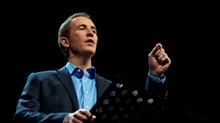
Dan Kimball on the history and impact of consumer Christianity.

We caught up with Dan Kimball, pastor of Vintage Faith Church in Santa Cruz, California, and author of They Like Jesus but Not the Church (Zondervan, 2007), at a conference where he was talking to other leaders about consumerism and the church. Kimball says the size of a church isn’t what makes it consumer driven, but how the leaders define success.

You’ve been talking to other pastors about consumerism in the church and the impact it’s had on our theology. How do you begin to recognize that impact?
You hear a lot of the complaints and valid criticism about the church being “a provider of religious goods and services,” as Darrell Guder says in the Missional Church. I started thinking about my own church and asking could the leadership be the ones who are really guilty of this? How did that happen?

I began to think about our meeting spaces. The early church met in homes where it is easier to participate, people can contribute, can be more vocal, make a meal, whatever. And then worship moved to the Roman basilicas and the format changed. People became more passive, but they still walked around and engaged. After the Reformation pews were brought in and people began to understand church different because they become passive. Expectations of a pastor and a leader become different. People expected us to do things for them.

So how has that translated into the church today?
We’ve been taught that this is how church goes. This is what you’re supposed to do. But now we’re making it better and bigger—better seating, better lighting, better sermons, better parking, better children’s ministry, better youth ministry. We’re simply fueling the whole thing.

But all of the consumer assumptions underneath are the same.
Yeah. And we haven’t yet challenged those assumptions. But my bigger question is what is this producing? Is it really producing people who are living and demonstrating the fruit of the Spirit in their lives? Are they loving one another and loving God more? What are we looking at for success?

So what is your sense? Are the ‘bigger and better’ churches producing the fruit of the Spirit?
I think it depends on the church leadership. As you talk to different leaders you pick up what they focus on. Ask them how they define success or what are they most excited about. That’s an interesting question. It reveals a lot. You can have a church of twenty thousand but what are you looking at as success? If I walked up to a person at your church would they say I’m here to get my religious goods and services. Or would they say I’m an active participant in the mission of this church, and this big worship meeting is just one part of it. Of course you can go to a small worship meeting and have the same exact thing. So it’s not about big church or little church necessarily.

So what are you guys doing at Vintage Faith to question those underlying assumptions of consumer faith?
We are asking God to transform us into a worshiping community of missional theologians.

Whoa. Whoa. Whoa. Say that again.
We’re asking God to transform us (because it can’t be done through human effort); into a worshiping community (because we want to be worshipers first); of missional theologians (because if we’re on a mission in our culture we have to be thinkers).

We’re calling the church more of a missional training center as much as we can. We’re launching community groups. We’re calling them "community groups" even though we see them as house churches, but that name has weird connotations for some.

And what about your worship on Sunday, does that look different too?
Not really. Sunday meetings are just one part of the rhythm of the wekk when we all gather together, and we try to express worship to God and to teach in ways that creatively reflect who we are and the values we are striving to hold. Sundays are about community, care, worship and Scripture. But I’d hope that if you were to walk up to someone in our church and ask them “What is church?” they wouldn’t talk about the big meeting but about being on a mission.

Posted by UrL on May 29, 2007

Comments

interesting. i just finished "they like jesus, but not the church" - good read. i like that kimball himself (even with the responsibilities of leading a church) is missional. if pastors intentionally (or unintentionally) serve as a model of what christianity looks like when it's lived out, then the church is in trouble.

but the church isn't in trouble with pastors and leaders like kimball. kimball breaks out of the traditional role of the ceo pastor and leads with his life. in my opinion it is a far more important role to live missionaly and call others to do the same, then to effectively lead a "christian corporation" that markets christian goods and services.

Posted by: brad at May 30, 2007

Dan has some good things to say and is fixing some of the bad traditions in consumer church, but there is much more room for improvement. It seems to me the foundations of consumerism are still at his place. Consumerism is people putting money out and getting back something for their money. Dan is still doing that. He maintains his “basilica” and a string of hired men to be the “pastors”. These two elements are what require his church, and every other institutionalized corporation church to “consume” 75 – 85% of the “offerings” to meet the needs of the people who give the $. So here, it’s “better to give and receive” instead of what the Bible says, “it’s more blessed to give THAN receive”. This quote is from Paul’s teaching the Ephesian pastors in Acts 20 regarding following his example in meeting your own needs financially while you help believers grow spiritually. There is more scripture of Paul’s teaching leaders to go BEYOND the “right to be paid” and to “refuse it”. 1 Cor 9, 2 Thes. 3. With this kind of economics in church, 100% of the “giving” can go out the door to meet the needs of those beyond you. It’s ALL giving, rather than a large percentage of pooling for the givers “needs”, ala consumerism. Consumerism ends when you aren’t getting something back for your alleged “giving”. It’s not really that hard to give up the basilica and it’s hired staffing system. There is no instruction in the Bible to gather in big groups to hear a Bible lecture and sing songs planned by 1 or 2 guys. Sure we like it, sure God has used it, sure it accomplishes some of God’s desire, but there is bad investment here with less eternal rewards, and it misdirects us from what God really HAS asked us to do.

Posted by: Tim at May 31, 2007

I'm glad I found this blog (*thru Burnside Writers Collective - a site I review for) but I must say...if these thoughts are 'cutting edge christianity', they are a little behind the times. The churches that are growing and actually thriving in North America are the ground-level, home-rooted ones (themeetinghouse.ca) and this has been going on for some time. The larger churches are Christian Corporate Businesses and are going the way of the ghost - If we look at the teachings of early Acts, we see the emphasis on believers in community and not a 'nice looking sunday place' but an attitude - a lifestyle - a challenge to share every possession we have with each other. We are at an exciting time in Christianity - a time of total upheaval and near re-definition with the obvious emphases where they should be - Christ. Any old world idolatrous views of the church that we cling to must be banished in order for connections to be made with those looking in from the outside.

Posted by: matt at May 31, 2007

These are wonderful things that need to be said. There is a powerful pull in pastoring to build one-stop-shops for people and their needs, and I live one of those communities where Christians have come to expect it.

But do seekers? Do the unchurched expect a mall when they enter a church? I am not so sure they do.

Posted by: Phil Steiger at May 31, 2007

What are you looking at as success? Perfect question. So many in our culture look at big and prosperous as the obvious answer to the question when it is not. I love his answer, "We are asking God to transform us into a worshiping community of missional theologians." Righteous!

Posted by: Aaron at May 31, 2007

Comments seem kinda sneery. This is hard stuff. I'm finding that asking these questions are pretty scary, strike right to the heart of how I evaluate church and self - even though years ago I began telling myself I didn't evaluate church and self that way anymore. It demands a rooted-ness in Christ that carries one through the absence of public affirmation that results from rejecting "growing" as the yardstick of success. Culture's hold on my heart runs pretty deep!

Posted by: Monte at June 2, 2007

If the success of a "church" is measured by the degree it impacts its world for the Kingdom, then the only thing that matters to God is the degree of change in those who come in contact with those who are the church.

Posted by: Wayne at June 5, 2007

The general reflection given earlier of larger churches as "Christian Corporate Businesses" and as going the way of the ghost is disappointing. Has this person been a part of a large church? Was it a bad experience? Is the implication that missional and New Testament honoring church is only lived out in the form of small, home based groups. Some regions of the country (i.e. the Southeast) have people both inside and outside the church who expect and are most accepting of a of church expressed in corporate worship at a building they can identify clearly. Contextualization is tremendously important - what works in the context the church lives in. Missionally effective churches can look quite different. Leadership's intentionality about being missional - in whatever size and structure - is key. I don't think my church with it's Colonial architecture (red bricks and columns) and large corporate worship times would be successful in other parts of the country if it were done exactly the same way. Yet, in its context, it is very effective. We learned not every expression of church is transferable everywhere. Great discussion, and my questions are just to help offer a different perspective. You can read about contextualization in "Breaking the Missonal Code" by Ed Stetzer.

Posted by: Dwight Munn at June 5, 2007

When the Spirit brought in so many converts on Pentecost and they were placed into small home-based groups, can/should we assume that they abandoned the Sabbath worship at the Temple? The home groups very likely were additional to Sabbath worship at first, not a replacement of it - are not both larger corporate worship experiences combined with smaller intimate accountability and growth group experiences necessary for healthy Body life? Do they have to be mutually exclusive?

Posted by: Don at June 6, 2007

Great thoughts!

I feel we do contribute to a consumer mentality as church leaders (perhaps accidentally). When we try to oversee everything and do everything, our church suffers (not to mention our families).

We need to trust Jesus when he said that "if we lose our lives serving, we will find our lives" (Mt. 10:39).

If this is true, we need to become recruiters and equippers allowing others the joy of serving. We need to lead our communities knowing that OUR PEOPLE need to serve more than WE need them.

In serving, the men, women, and kids in our community will find healing, discover their uniqueness, contribute towards changing the world, and grow in their faith.

Thanks for this article!

Blessings,

Eric Bryant
Mosaic

Posted by: Eric Bryant at June 7, 2007