If you like our blog,
check out the journal!

Subscribe to Leadership Journal

Save 21%


twitter updates


    blogs we're watching


    books we're reading


    Seminary &
    Grad School Guide
    Search by Name


    Or use Advanced Search to search by major, region, cost, affiliation, enrollment, more!


    Other Searches
    « Book Review: Jesus Wants to Save Christians (Part 1) | Main | Book Review: Jesus Wants to Save Christians (Part 2) »

    July 31, 2008

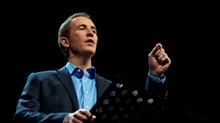
    Out of Context: Mark Dever

    dever.jpg

    "Too many Christians today are trying to improve on the gospel. The gospel is what it is: the Cross of Christ. Christians on both the political right and the left are downplaying the effects of the Fall, and instead buying into a secular myth of progress through market economics or socialism."

    -Mark Dever is pastor of Capitol Hill Baptist Church in Washington, D.C. Taken from "Does Your Preaching Touch Politics?" in the Summer 2008 issue of Leadership journal. To see the quote IN context, you'll need to see the print version of Leadership. To subscribe, click on the cover of Leadership on this page.

    Posted by UrL Scaramanga on July 31, 2008


    Trackback Pings

    TrackBack URL for this entry:
    http://blog.christianitytoday.com/mt/mt-tb.cgi/1435


    Comments

    ok. Could you elaborate. All Denver did was use Christian-eze. No one outside of the BOdy of Christ would have any clue what "the gospel is the Cross of Christ" could mean.

    i'm actually an evangelical Christian who attended a Christian University and I'm really confused by his statement.

    is the gospel the actual cross that Jesus was crucified on?

    please explain...

    Posted by: Adam Lehman at July 31, 2008

    "...and instead buying into a secular myth of progress through market economics or socialism."

    Were it only that.
    Both christian liberals and conservatives, whether politically active, or socially active really have the same goals in mind, though with differing results.
    Both want absolute political power: The liberals through the populace's subservience to the national collective to hand it to them because of all people the intellectual elite knows whats best, the conservatives through usurpation of established governing limitations and the collective willingness of the populations subservience to the will of a few wealthy/powerful who knows whats best.
    Both want to rewrite the US constitution, and both want to limit individual rights...and depending on which side one leans too one will see it as A-okay with them (hence the willingness of each sides core 30% to nod vigorously in support of any and all outrages regardless of legality or constitutionality).
    As far as change through market forces and social re-engineering goes...those are inevitable outcomes of eithers efforts. Each subject to its particular patronic political inclination.
    The American Church has sold its soul, and the new note holders are the two political parties of the land...with some liens by the smaller political parties.
    Overall, we have lost our way...and boy, howdy, does it ever show.

    Posted by: sheerahkahn at July 31, 2008

    No one is trying to "improve" upon the gospel. The gospel is multi-faceted and far-reaching. I'm sorry if that's too complicated for Mark. Of course it centers around Christ crucified, but from there the implications are enormous and reach into many dimensions of life. It is about the redemption of the Cosmos.

    The only gospel we are trying to rescue is the truncated, modern one that morphed and folded in on itself in the hands of foundationalists.

    Posted by: Darren King at July 31, 2008

    Darren,
    I think it would be helpful for in understanding your position if, as per Adam's request above, you state what you believe the Gospel is and then tell us how foundationalism applies to Mark Dever's comment.

    As a bit of critique, I'm not sure you can graciously start implying that Mr. Dever a simpleton without giving a reason for that conclusion.

    I'm confused by your denigration of the statement that the Gospel is the "Cross of Jesus", inferring Jesus' death for love of sinners and the resurrection that proves his divine triumph over sin. The Apostle Paul seems to think, according to 1 Cor. 15, that this is a fair summary of the gospel.

    Of course the consequences of the gospel in each of our lives, believer and unbeliever, are extremely complex...Christians have been bought with a price and that is a joyful though heavy reality. And I think it can be faithfully said that the gospel has been warped by modernism into an erroneous easy-believism, intellectual-assent-equals-faith form.

    Is a possible concern that postmodernism is warping the consequence of the gospel in the life of a Christian into easy-activism...justification through social-justice?

    ...just trying to promote grace-filled, Jesus-loving, charitable conversations.

    Posted by: Paul Dalach at July 31, 2008

    I "second" Darren King's comment!

    Furthermore, blanket statements such as the one taken out of context here are starting to bug me. I'm sure I make many of the same types of generalizations, but I want to stop that annoying habit. As they're really more harmful than helpful, and they never tell the real story.

    Posted by: Jonathan Stone at July 31, 2008

    Paul,

    I didn't call Mark a simpleton. I said I won't apologize to him if I believe (along with many others) that the implications of the gospel are multifaceted and far-reaching. Many, such as Mark Dever, have a desire to boil the gospel down to a simple formula, easy to fit on a business-card-sized handout. But it’s just not that simple. And that's a glorious thing, the gospel is far-reaching!

    Again, I'm not saying the cross of Christ is not paramount. If you read my first comment I make it clear that it IS. But if you read Jesus in context, its clear that the gospel is not primarily about individuals getting a ticket to go to Heaven when they die. That may be an implication - but it is not the central theme - though our individualistic society would like to believe otherwise. The gospel really speaks to the in-breaking Kingdom of God.

    Lastly, Mark and others would like to suggest that postmoderns, or emergents, or whomever, are "adding" to the gospel, so as to make it more palatable to the world. That's just not true, nor fair. I believe strongly that the wing of the Church that Mark represents have actually reduced the gospel till it exists in truncated form - as I said in my first post. So it is they who should do the adjusting, until they fall in line with a more historic understanding of the gospel.

    By the way, for more reading on this topic I'd suggest Scot McKnight's A Community Called Atonement, as well as some N.T. Wright thrown in for good measure.

    Posted by: Darren King at August 1, 2008

    The Gospel is as explained by Paul in 1 Cor. 15. All these other things come into play in the Christian life, but are not part of the gospel. For example, while we believers are (among other things) to be stewards of the earth, Jesus didn't die to save a tree. I think Darren is off here, but it's I position I've heard many times. When someone uses words like "truncated" or "robust" I get the idea that it's not really the gospel they're talking about.

    Posted by: Alison at August 1, 2008

    Darren, Yeah, you did call him a simpleton.

    Posted by: Alison at August 1, 2008

    I probably would agree with Pastor Dever's views, but I've always hated the phrase "it is what it is".

    When I was deeply entrenched in corporate America, that phrase was used to avoid saying exactly what it is.

    Maybe this is the problem with Out of Context, but I don't like "the Gospel is what it is".

    Posted by: Pastor Kip at August 1, 2008

    Darren,
    I wasn't offended or put off by Dever because I think he is, if I understand him correctly, right. If you add moralism (fundi side) or social-activism (pomo side...and just another type of moralism) as a requirement to experience God's grace, you've added to the gospel. This is Paul's main argument in Galatians against the Judiazers. Reconciliation between God and man because man was corrupted by sin...that is the essence of the "good news". Grace not because what we've done for God or man. But also grace for those who believe, not all you are living.

    Now, once the gift is given and if it is truly received, that gift transforms us and breeds within us desires for the Kingdom that we never had before. Yes it bring eternal life (words Jesus said himself) and yes it brings change for today. It brings a daily conviction of sin and a daily repentance. It isn't "believe and say this prayer and you are saved". And it isn't "do justice and God will approve". Neither is the is the gospel. They are, at best, a sound response to the gospel.

    Frankly, we all have such varied "teams" it's hard to know what you believe so I don't know if you believe that or not. For the sake of dialogue, that is why I asked you for what you believe this more robust gospel is that you believe postmoderns have cornered. Flat out, most people at most times have messed up both the simplicity and the weightiness of the gospel. And we certainly all need to wrestle with the work of the gospel in our lives so that our world can know the goodness of the works of Jesus.

    So again, please, I invite an explanation of your view? Giving grace to my incompleteness since I have to write in 1500 characters or less...where is your understanding of the gospel so much more robust and complete? Is it in idea? Or action? Or in complete conception? I've asked before...brother, it'd be helpful to have something more concrete for sake of discussion. I'm not in the position to read McKnight or Wright's books in the next few days.

    Posted by: Paul Dalach at August 1, 2008

    To have "a more historic understanding of the gospel" I think we need to have an understanding of what "gospel" even means. It is "good news." Good news to whom? Society? If I am rich and living a carefree life is it good news to me that I should give away all of my money to poor people, most of whom will probably spend it on drugs, alcohol, or pornography anyways? I don't think so.

    Even more vaguely, can we conceive of good news that isn't individualistic? Do we have accounts in the NT of societies receiving the good news or individuals? And if it is for societies then why do the NT authors have to put so much emphasis on developing and maintaining unity? How can that possibly be directed at groups of people and not at individuals?

    The Gospel has to be good news for me first and foremost. Then, once it is good news for me and I embrace its goodness, it will compel me to be obedient to God's various commands, among which are caring for the poor and destitute and loving my neighbor as myself. However, nothing works until I have been reconciled to God personally.

    Remember, the greatest commandment is love God with all your mind and heart and soul and strength. If you don't do this, which is an individual action, then forget about doing the rest.

    Posted by: Todd Burus at August 1, 2008

    Can I just say that I think the Gospel is pretty simple? Will I be a voice crying alone here?

    I think the things of God get complicated when we don't like what He plainly says, and we try to "work it out".

    Posted by: Pastor Kip at August 1, 2008

    "I didn't call Mark a simpleton."

    Uh...hmmm, Darren, I'm going to point something out to you:

    "No one is trying to "improve" upon the gospel. The gospel is multi-faceted and far-reaching. I'm sorry if that's too complicated for Mark."

    You did, in fact, call him a simpleton, you just didn't directly write it out...you inversed your thoughts with the corollary to simpleton..."too complicated." Your implication/intent was quite clear.

    Now, that it is obvious you were unaware of your intent in that statement, and given your following statment of

    "But it’s just not that simple. And that's a glorious thing, the gospel is far-reaching!"

    Which has a nebulous, and therefore, wispy, incorporeal concept to it...would you please disciple-up, and ground that "wooohooo" concept in more concrete terms?

    Because as I see it, it really is that simple, and I can summarize the gospel in less than a sentence, which oddly enough would fit on a business card; And if I really got creative, I could summarize the totality of the gospel for mankind in three senteces, so depending on the font, would, also, fit on a business card.

    Posted by: sheerahkahn at August 1, 2008

    Alison,

    Don't put words in my mouth please. I never used the word "simpleton". And if you chose to interpret the words I did use that way, then you misunderstood me.

    Posted by: Darren King at August 1, 2008

    Paul,

    I think I've been clear based on the format we're dealing with here. You say you don't have time to read McKnight or Wright in the next few days... Fair enough. But neither am I prepared to write a point-form summary here. I don't think I could do it justice in the space alotted.

    And besides, that would make just way too flimsy a straw-man for you to shoot down.

    :)

    Peace,
    Darren

    Posted by: Darren King at August 1, 2008

    Sheerahkahn (and others),

    Let me make the matter absolutely clear.

    I wrote:
    "The gospel is multi-faceted and far-reaching. I'm sorry if that's too complicated for Mark."

    I meant by that that I would not apologize if this construction was more involved than Mark would prefer. I was speaking of theoligical contructions, not Mike or anyone else's ability to grasp those constructions.

    To be utterly clear, I don't doubt for a second that Mark CAN conceive of what I'm saying, I just don't think he agrees - because, by the very nature of his post, he thinks that overcomplicates things.

    Now is it clear what I meant?

    I neither called Mark a simpleton, nor meant to suggest that he was one. I was merely pointing out what he himself says, that my formulation of the gospel is too complicated for his liking.

    I hope we can put this matter to rest now.

    Yikes.

    Posted by: Darren King at August 1, 2008

    y'all stop pickin' on darren...

    url, you need to have a post where someone who is brave enough states exactly what he/she believes the gospel is, or how someone gets 'saved,' and then we commentators tear it apart like wolves stumbling upon fresh roadkill.

    you'd be surprised how those who think the gospel is 'so simple' will be essentially unable to distill it into a sentence or two. and then others will point out something - "yeah - but what about...?" - and the original phyllis distiller will say, "oh yeah, sure, that's what i meant. obviously, that's a part, too."

    and somehow people like dever - and unlike darren - think there's some magic formula set of actions, prayers, or handshakes by which an unsaved-bound-for-hell individual becomes a saved-and-on-the-gospel-train saint. and, sadly, that formula becomes the raison d'etre for Christianity.

    go ahead. put that one out for us to play bible-verse-tennis with.

    how many regulars do we have here - 25? 50? whatever it is, add 1 to it, and that's how many different answers we'll have.

    at least.

    mike rucker
    fairburn, georgia, usa

    Posted by: mike rucker at August 1, 2008

    Darren,
    I've invited you to at least make a beginnings...to have a conversation about what the real gospel is. I've pointed out relevant passages where the Apostle Paul summarizes the gospel as a point of reference. Is that point so ignorable that you eschew all conversation about it?

    I've tried to open a discussion about whether we've entangled the gospel with the intended results of the gospel in the life of believers. I've owned up to some of the egregiously sinful errors of the group I, more or less, align myself with. You've decided not to at least start the conversation. Why not? Is your belief so complicated as that? Or too complicated for me? If not, friend, view this as a chance to help a brother who desperately wants "the real gospel".

    Honestly, with no sarcasm, I don't want to be the one on judgment day looking at Jesus when he says "depart from me I never knew you". For that is what is at stake. So I want to know if what you say truly has substance. Considering the passion you responded with to Dever's comment, surely this couldn't be about fluster, frustration, or bravado. With the weight of the gospel being discussed, I'd hate to think any of us would treat so meanly a discussion about the gospel...treat it as a point for lobbing bombs at the other side.

    Posted by: Paul Dalach at August 1, 2008

    I don't want to pretend to speak for Darren, but it seems to me that what he is proposing is speaking of a "robust" gospel is one that sees the work of Jesus on the cross form a perspective that is larger, yet still centrally contains, the implications it has in setting us free from sin.

    Scripture does indeed speak of the work of Jesus on the cross as having implications that extend to all creation...

    "For in him all the fullness of God was pleased to dwell, and through him God was pleased to reconcile to himself all things, whether on earth or in heaven, by making peace though the blood of his cross." [Colossians 1.19-20]

    So in the end, the work of Jesus on the cross, was far more than merely helping forgive my sins. It included that and much more. It was about the Kingdom breaking into this world [which consumed much of Jesus' words and example for us]. The cross, and especially the resurrection, was about putting things to right again. It was about bringing wholeness, or shalom, the peace of God, which was spoken of above.

    The glorious work of the cross is far-reaching, as well as mysterious. It is grace poured out, as well as a wholeness bestowed. It was, in the words of Paul, where God was reconciling all things in this world to himself. The cross, in its mystery, is more than the forgiving of personal sin so we can "go to heaven someday" - it is about a restoration mission, beginning in us and carrying on until the return of Jesus.

    Posted by: Mike DeVries at August 2, 2008

    I think I've been clear based on the format we're dealing with here. You say you don't have time to read McKnight or Wright in the next few days... Fair enough. But neither am I prepared to write a point-form summary here. I don't think I could do it justice in the space alotted.

    I'm glad John didn't cop-out of recording his gospel even though there wasn't adequate enough room to share the whole thing.

    And I'm glad that it apparently takes a college degree to understand and share the Gospel, which disqualifies about 75% of the population from evangelizing. That is obviously what Jesus intended in the Great Commission. Dang simpletons!

    Posted by: Todd Burus at August 2, 2008

    As a wise friend of mine once pointed out that, "Anything is only as complicated (multi-faceted if you prefer) as people need to make it to avoid taking action." In the case of the Gospel the action would be 'repent and trust'.

    There is no one who is too simple for the gospel. There are a lot of people who are too intelligent, but never to simple.

    And besides, that would make just way too flimsy a straw-man for you to shoot down.

    Darren,
    Isn't that statement made towards Paul a straw-man in itself? Or are you stating that your argument is a flimsy straw-man?

    Posted by: James at August 3, 2008

    Everyone,

    Don't you think it’s starting to get a little unnecessarily nasty in here? I feel like personal attacks are trumping sound dialog at this point. Maybe if we all step back for a second, we'd realize that the tone of late is neither productive, nor edifying.

    James, I wasn't trying to be evasive, or set up a straw man of my own. I'm just saying that one can speak "about" the gospel, in all its fullness, without feeling one can "nail it down" in two or thee bullet-points.

    And, of course, I was being a little playful too. Didn't you see the happy face directed towards Paul?

    But it wasn't like I didn't answer the question. I said that the gospel, the "good news", was the announcement and inauguration of the Kingdom of God in the person of Jesus. Furthermore I said that the gospel was NOT primarily about people getting fire insurance for when they die.

    Usually, when people (such as Mark) say the gospel is being "improved upon", what they mean is that the gospel should really be all about individuals getting saved so they can go to Heaven. And not only do I think this is a highly truncated gospel, but also a slightly distorted one. And I’m not speaking from sort of postmodern “I wish it was” kind of place. I’m firmly basing my view in the biblical witness.

    Peace,
    Darren


    Posted by: Darren King at August 4, 2008

    Mike Devries,
    I appreciate your explanation. I agree that the work of redemption extended to all creation. I believe the bible is clear that sin is not only what we've done but also what we are...and this corrupted state extends to all creation. Jesus bought the right to rule and restore by his actions on the cross.

    But this is where I'd appreciate Derran's own perspective. The complication that many people like Dever speak against is not the reminder that redemption includes all of creation, ultimately fulfilled by a new heavens and new earth. Dever, from however little I've interacted with his material (anyone please correct me if I'm wrong), is not a conversion-is-mental-assent and the gospel-is-for-only-eternal-life-so-hold-on until the rapture crowd (okay, no more hyphens!). If that is how Derran is taking him, talk about a straw-man. But maybe Dever is like that and Derran is right. Which is why I invited Derran to speak for himself.

    I categorically disagree with much of Emergent's disregard for atonement as the central work of the cross...and this is where I think talk of "more robust" is great err: redemption of sinful creation is about as robust as you get. There are more facets of the cross, but the biblical writers certainly point to redemption as main point of "the gospel". Mike, it doesn't seem you disagree with that.

    Mike Rucker,
    Is it perhaps that you've entangled the effects of the gospel with the gospel itself? The gospel is conceptually simple. The results and implications are extraordinarily complex and weighty. I think the danger is that many reform (deform) the gospel into something more complex so that the implications, by linear lineage, are more intuitively understood, rightly, as complex. I think this is why the Apostle Paul can explain the gospel in a few sentences (simple) but takes whole letters to work out the implications throughout the rest of the epistles (comlex).

    Thanks.

    Posted by: Paul Dalach at August 4, 2008

    There are some really great thoughts here. It is interesting to me that so much discussion and disagreement can come out of a comment "intentionally" quoted "out of context". I would have to say, not knowing much of anything about Mike Deaver, that I would basically agree with his statement.

    For Darren King: You are correct in your assesment of a "robust" life in Christ. But that life must begin with a new birth. Man has always had a means of becoming reconciled with God. The Old Testament is filled with the law given by God to Moses and the means by which both nations and indivuduals came to that place. It could not be accomplished without the shedding of blood. Why? Because God said so. He never gives an explanation of why this is the price so one must choose to believe that those words are true or not. The "good news" or "gospel" is that Jesus death on the cross changed the necessity for me to bring my own blood sacrifice - a perfect lamb being the only choice. If you read the OT you can't help but understand how the Jews would be attracted to the concept of relief from that obligation. They understood in a way that is foreign to the western world. I believe one reason the "gospel" is spreading so quickly in 3rd world countries is that many of those people still offer blood sacrifices for their sins yet have no sense of peace and forgiveness. Imagine the eagerness these people would have for a God who provided a 'dirt simple sacrifice' and they can have forgiveness and peace instead of bondage. It is a message that even a simpleton or a child can understand. In fact, Jesus told us that we must become like little children or we will make it too complex. Until this takes place, the "robust" part is false, just as it was for the Pharisees.

    Posted by: Melody at August 4, 2008

    Paul - a brilliant answer. Thank you.

    Posted by: alison at August 4, 2008

    Paul,

    I appreciate the thoughts and tone expressed in your most recent post.

    I would say though, that on your last point, it’s not so easy in practice (nor, I would argue, fruitful), to separate consequences and implications from first causes. I think it’s all organically, intrinsically connected.

    When one looks at something from a one perspective, things can look pretty easy to delineate. But when seen from other perspectives, ascertaining where one thing begins and another ends, isn't so easy.

    We try and separate things out, for the sake of teaching, and for clarity of thought, but, it seems to me, we should always keep in mind that these are still, at best, attempts at translating multi-dimensional realities into more narrow frameworks.

    This isn't a bad thing, it just happens, and necessarily so. But perhaps some hermeneutical, epistemological, and theological humility would be appropriate. Don't you think?

    Peace,
    Darren

    Posted by: Darren King at August 5, 2008

    Paul, thanks for your thoughts.

    Yes, I do not disagree one bit. I think the question we are wrestling with is one of semantics and deeper understanding. This leads me to a few questions I have...

    What do you mean by the "redemption of sinful creation"? Are you referring predominantly to humanity, or something larger?

    I would argue that indeed the Gospel writers did focus on redemption as the focal point of the "gospel." However, within their historical-social context as Second Temple Jews, this "redemption" went far beyond mere forgiveness and "going to heaven someday."

    As for the Emerging church movement as a whole [larger than the organization "Emergent"], I have friends who are vocal proponents. I have never heard a one of them "disregard the atonement as the central work to the cross." I have heard many of them see the atonement as larger then merely one theological interpretation [penal substitutionary atonement]. They may see different nuances in atonement theology, but then again, so did many church fathers. on the flip side, I have heard some in the Emerging church movement try to distance themselves too far from substitutionary theology, perhaps this has been your experience.

    Posted by: Mike at August 5, 2008

    Darren,
    I think you're right to say that results and very difficult to disentangle from their causes.

    Let me throw a metaphor of sorts out there since this is how I think. Hopefully it's helpful. It is impossible, once grown, for a plant to be disentangled from its seed. From the point of view of the plant, it is merely the maturation of the seed. So though we can't truly disentangle the greater complexity of a grown plant from it's progenitor seed, we still can distinguish a simple seed FROM a complex plant. To be explicit, gospel is the seed and the plant is the lives of a faithful Christian.

    And so I have to credit Jesus (mustard seed) and Paul (Paul vs. Apollos) with that metaphor, since as I was writing this out I realized that it had been used before to describe the Christian life.

    Does this somewhat capture what you're thinking, Derran?

    Thanks for the great dialogue.

    Posted by: Paul Dalach at August 5, 2008

    Mike,
    I think you're distinction between emerging and Emergent is helpful in this case. I've had more interaction with Emergents and there are a whole slew of interconnecting theological debates I feel are relevant. But perhaps the biggest one to me is a strong Emergent contingent's view of penal substitution, not as an act of love that the Trinity performed for love of us and glory for themselves, but as a repulsive idea of divine child abuse (there's been tons of debates of Brian Mclaren's work over this and I've seen some hints of Rob Bell being somewhat in agreement with it). I agree with Melody's post here...the theology and the sentiment. I'm one like your friends who view redemption/reconciliation as central to the cross but with many complementary facets.

    You asked about what I mean by "redemption of sinful creation"? I think what was in my head is best explained in Colossians 1, with redemption and reconciliation used more or less interchangeably (hmm...is that a problem?...have to think about that.) :

    "19 For God was pleased to have all his fullness dwell in him, 20 and through him to reconcile to himself all things, whether things on earth or things in heaven, by making peace through his blood, shed on the cross. 21 Once you were alienated from God and were enemies in your minds because of your evil behavior. 22 But now he has reconciled you by Christ's physical body through death to present you holy in his sight, without blemish and free from accusation-- 23 if you continue in your faith, established and firm, not moved from the hope held out in the gospel. This is the gospel that you heard and that has been proclaimed to every creature under heaven, and of which I, Paul, have become a servant."

    Is that a helpful in clarifying?

    Posted by: Paul Dalach at August 5, 2008

    Mike Rucker,
    Is it perhaps that you've entangled the effects of the gospel with the gospel itself? The gospel is conceptually simple.

    ok, what is it?

    and what is 'conceptually,' other than a means to fudge being specific?

    and what are the 'effects' of the gospel? is it 'effectual' on its own? or do you believe everyone is 'lost' and must be saved? if so, what must one do with it - if anything?

    and what does 'preaching the gospel' mean? telling a story from the bible? asking for every head to be bowed and every eye closed so that those who are 'ashamed of the gospel' can raise their hands without anyone seeing them? and which options on the basic model (baptism, speaking in tongues, etc.) does your denomination require to bless someone with 'salvation'?

    can i believe in a different Jesus than you do (chances are, i do...)? to what degree? mine is a big Jethro Tull fan; how about yours? so is one of us saved and the other not?

    can i shut up now?

    m.r.

    Posted by: mike rucker at August 5, 2008

    Thank you Darren and Mike and Paul and others for trying quite well to be kind and to listen to each other's comments. This can be very hard to do in this medium.

    I just wanted to say thank you for not giving up on the conversation.

    One thing that I note is that one of the reasons I believe people like Dever or Sproul or Piper, etc, keep talking about the "Cross of Christ" even to the degree that some feel like it is reductionistic is because they see the idea of Penal Substitutionary Atonement being (at best) placed to the side among other aspects of the gospel. The thing that they are fighting for is that the Atonement as understood in this way is not among the implications, it is the spring from which all that is grace flows.

    As I am sure you know, 1 Corinthians 2 puts it this way, "For I resolved to know nothing while I was with you except Jesus Christ and him crucified." It is not that this is all there is to the meaning or importance or implications of the gospel. It is simply that if you can concentrate on this and get this then this crucified Christ atoning for sin is the place from which flows all else that we might speak. It also serves as the corrective against any foreign additions that are not genuine implications.

    Let's look at a biblical example. If you get the atonement you won't become bound up by the law (i.e. the Judaizers). Now, it is not the gospel that the believer is free from the law. The gospel is that the believer is reconciled to God because of Christ became our righteousness and paid our debt. But if you get the gospel you will get that Christ has fulfilled the law on our behalf.

    I think that this example can pour over into the present conversation. Make much of the gospel as the life and work of Jesus Christ culminating in the crucifixion and resurrection and the meaning of this gospel in the life of the church and the believer will flow from this all important source.

    That is why I believe that Dever and others can sound reductionistic. It is in this simple gospel that the manifold grace of God appears.

    Again, thanks to all of you for your gracious interaction about the gospel.

    Posted by: Jeremiah Fyffe at August 5, 2008

    Mike Rucker,
    Dude...are you okay? :-\

    I'm sorry...I believe those question have answers, even if the edges of the answers are a little blurry.

    I didn't mean to hit a nerve...and I'm not about to quarrel in response.

    Paul

    Posted by: Paul Dalach at August 5, 2008

    What a silly argument. When will Christians just learn to get along with each other and focus on more important issues.

    Posted by: LayGuy at August 5, 2008

    Mike Rucker, Dude...are you okay? :-\

    regular readers here know too well the answer to that question ... :)

    even if the edges of the answers are a little blurry.

    thanks, but i can argue my side myself...

    in a foxhole, trying to make sure your fellow soldier doesn't spend eternity in flaming torment, i think it behooves you to make sure nothing is in the least 'a little blurry.'

    which is why Dever's statement is easy to make, yet impossible to reduce to its pragmatic implications and, more specifically, how it's put into practice.

    I'm not about to quarrel in response.

    i thought only republicans had deemed intelligent debate off limits or unpatriotic (unChristian?). i'm not quarreling, just asking you to specifically say what you - and Dever - mean.

    and then, of course, mean what you say.

    Posted by: mike rucker at August 6, 2008

    Good gosh, look at what John 3:16 has become . . .

    Posted by: Pastor Kip at August 6, 2008

    Post a comment


    Remember Me?

    (1500 characters max; you may use HTML tags for style)

    Verification (needed to reduce spam):